- SJM Launches Zero-Carbon MICE Services to Propel Macau Towards a New Green MICE Milestone.
- SJM signed a Memorandum of Understanding on end-to-end carbon neutrality collaboration with the Macau International Carbon Emission Exchange.
SJM Resorts, S.A. (SJM) announced recently that Grand Lisboa Palace Resort Macau has become the first integrated MICE venue in Greater China to achieve sustained carbon neutrality through the use of high-quality carbon credits.
The company also launched Macau’s first standardized Zero-Carbon MICE Service, further strengthening its sustainable events offerings and supporting Macau in establishing itself as Greater China’s premier sustainable events destination. To mark the occasion, SJM hosted the SJM Green MICE Forum and Zero-Carbon MICE Product Launch, bringing together over 150 industry leaders and sustainability experts to explore emerging opportunities in green events and the low-carbon economy.
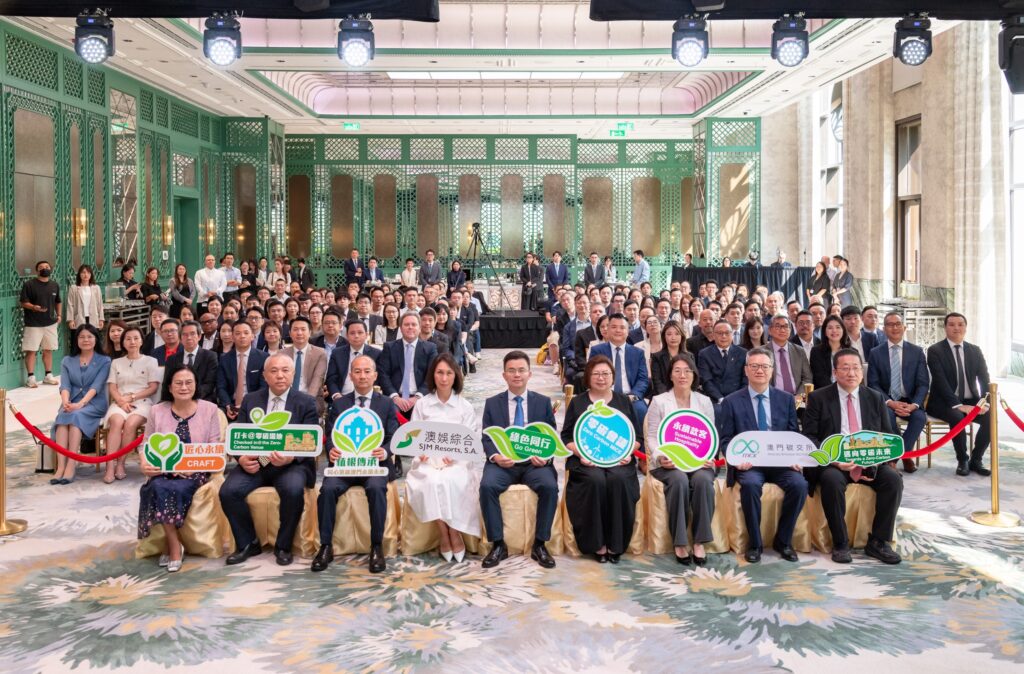
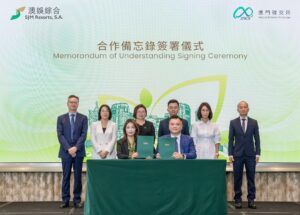
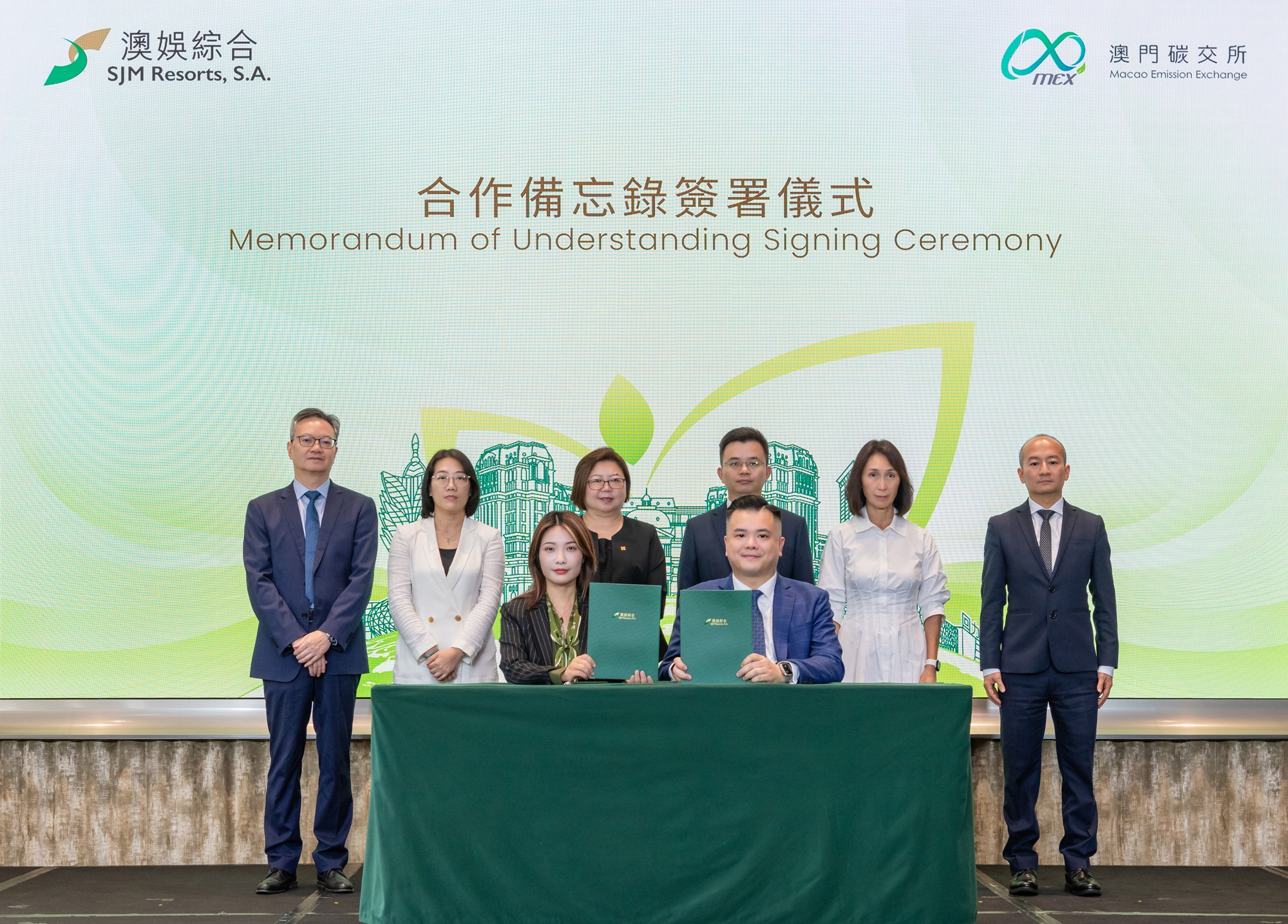
At the event, SJM signed a Memorandum of Understanding on end-to-end carbon neutrality collaboration with the Macau International Carbon Emission Exchange, further advancing the development of a zero-carbon MICE ecosystem.
Witnessing the signing ceremony were He Biao – Representative of the Economic and Financial Department of the Liaison Office of the Central People’s Government in the Macao SAR, Elaine Wong – Acting President of the Administrative Committee of the Macao Commerce and Investment Promotion Institute (IPIM), Chan Mei Pou – Head of the Environmental Planning and Assessment Department of the Environmental Protection Bureau (DSPA), Glen Chong – Head of the Licensing and Inspection Department of the Macao Government Tourism Office (MGTO), Daisy Ho – Managing Director of SJM and Wu Jianfeng – Director of the Macau International Carbon Emission Exchange.
SJM brings together over 150 Industry Leaders and Sustainability Experts to explore opportunities in Green MICE and the Low-Carbon Economy.
Grand Lisboa Palace Resort Macau also became the first integrated MICE venue in Macau to achieve carbon neutrality through a diversified portfolio of high-quality carbon credits, including credits from Portuguese-speaking countries, China Certified Emission Reductions (CCERs), and carbon removal projects.
Based on carbon accounting, the Grand Lisboa Palace Resort Macau convention and exhibition venue’s average annual greenhouse gas emissions for 2025 and 2026 amounted to approximately 5,827 tons of carbon dioxide equivalent (tCO2e). Emissions for both years have been fully offset through the purchase of high-quality carbon credits and the venue was awarded carbon neutrality certification during the event.
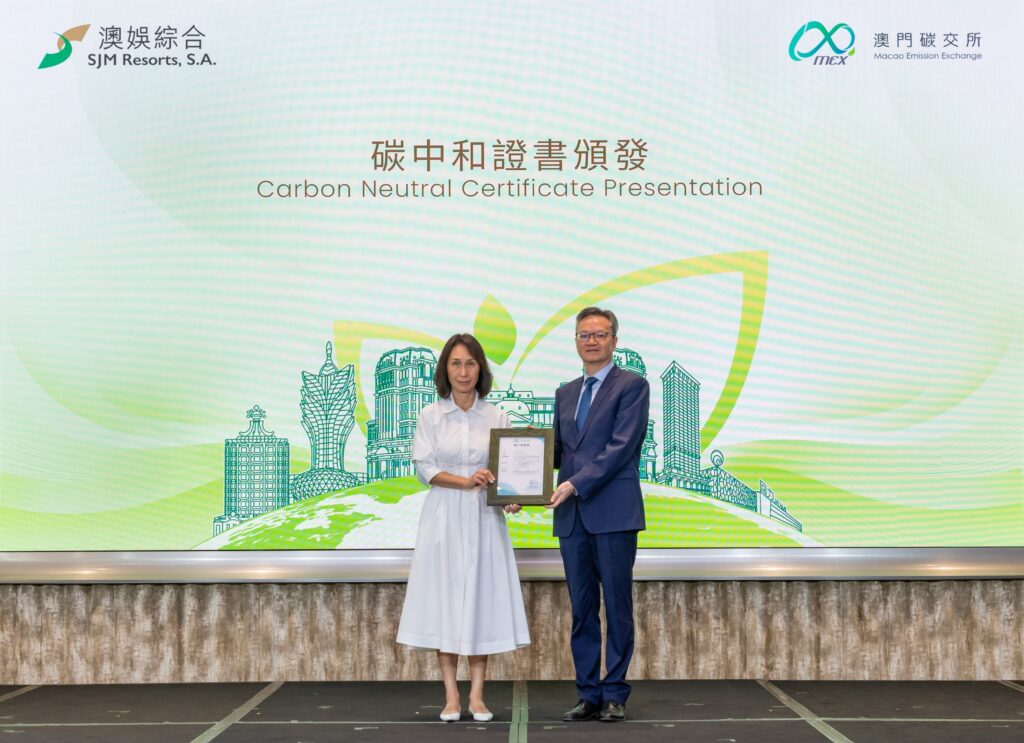
The carbon accounting exercise covers a total operational area of 33,366.67 square meters, including exhibition buildings, outdoor gardens and supporting kitchens. It captures Scope 1, Scope 2 and Scope 3 emission sources such as fossil fuel combustion, net purchased electricity, refrigerant leakage from air‑conditioning systems and water‑treatment activities. All data is traceable to original operational records, laying solid groundwork for subsequent reviews and audits. The project operates a two‑stage verification mechanism: carbon credits are pre‑purchased and retired ahead of events to issue a Pre‑Carbon‑Neutrality Statement, while post‑event reconciliation against real‑world emissions generates a Final Carbon‑Neutrality Statement.
This initiative delivers five industry‑first milestones: Macau’s first long‑term operational zero‑carbon MICE space; the first resort‑based MICE venue across Greater China to deploy carbon‑removal projects; Macau’s first MICE venue to offset emissions with carbon credits originating from Portuguese‑speaking countries; China’s first cross‑border CCER application within the MICE sector; and the first real‑world deployment of cross‑border linked environmental‑rights products for event operations. In parallel, venue‑wide energy‑efficiency measures including wind‑power recovery from cooling towers and smart building controls have helped contain emissions growth even as event volumes rose sharply in recent quarters.
The 2025 and 2026 emission profiles differ in their offset arrangements. For 2025, green power certificates were deployed to address electricity‑related emissions, while supplementary carbon credits covered remaining sources. For 2026, a mixed portfolio of international and domestic carbon credits was adopted to cover projected full‑year emissions. These differentiated approaches demonstrate how tailored environmental‑rights solutions can be applied to real‑world venue operations.
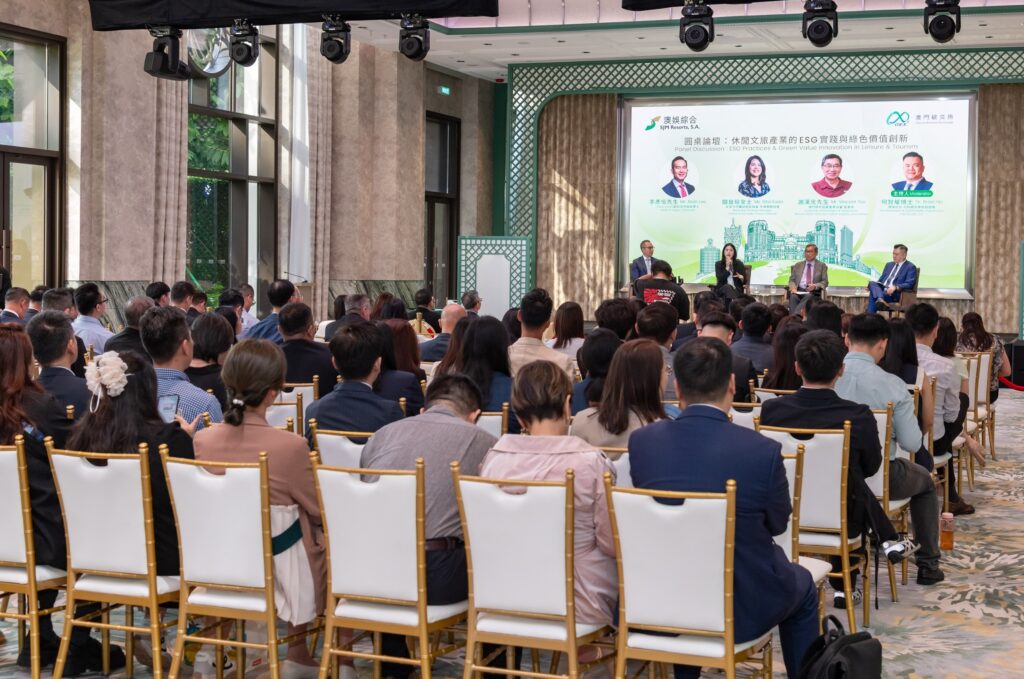
The roundtable discussion explored ESG practices in the Tourism and Leisure Sector, innovation in Sustainable Value Creation, and opportunities for cross-sector collaboration.
This practical model bridges environmental‑rights supply and local business demands, offering replicable reference for other MICE venues aiming to build their own zero‑carbon service frameworks across the region.
Daisy Ho – Managing Director of SJM – said, “Sustainability is integral to SJM’s business strategy, and we are committed to driving Macau’s MICE industry forward — from green events to truly zero-carbon event delivery. Through our comprehensive Zero-Carbon MICE services, we aim to give our MICE clients the measurable, verifiable and disclosure-ready environmental data they need to meet their sustainability objectives, while further strengthening Macau’s reputation as Asia’s leading sustainable events destination. ”
The executive added, “We will also continue to draw on Macau’s unique position as “One Centre, One Platform,” using carbon credits from Portuguese-speaking countries as a bridge for green industry collaboration and new sustainable development opportunities.”
Building on these initiatives, SJM has officially launched its Zero-Carbon MICE services, offering clients a one-stop solution for planning and delivering more sustainable events at the Grand Lisboa Palace Resort Macau.
The service includes sustainable event planning, environmentally responsible venue setup and recycling, sustainable catering options, event impact reporting and carbon-neutral event certification, helping organizers embed sustainability throughout the event lifecycle.
Through this comprehensive service offering, corporate clients can access measurable, verifiable and disclosure-ready carbon emissions data, together with supporting documentation that strengthens ESG reporting and sustainability performance management.
The offering is underpinned by Grand Lisboa Palace’s ISO 20121:2024 Event Sustainability Management System certification, LEED Silver certification, and SJM’s membership in the Global Sustainable Tourism Council (GSTC).
The forum focused on emerging trends in green events and carbon markets, with Zhang Jianyu, Executive Board Director of the China Association for NGO Cooperation, delivering a keynote presentation titled “The Multidimensional Value of the Green MICE Economy”.
Lei Xuejing, Marketing Director of the Macau International Carbon Emission Exchange, then shared insights into the latest developments and practical applications in the global market for high-quality carbon credits.
The event also featured a roundtable discussion with Brian Ho, Vice President of Sustainability at SJM; Vincent Tse, Vice President of the Macao Green and Low Carbon Industry Association; Rita Kuan, Market Strategy Manager at the Global Sustainable Tourism Council; and Alvin Lee, Head of Supply at Puro.earth. The panel explored ESG practices in the tourism and leisure sector, innovation in sustainable value creation and opportunities for cross-sector collaboration.