- MGM opened the “Maritime Silk Road” achievement exhibition on 5 February in Macau’s Barra District.
- The associated “Talent Training on the Cultural and Creative Design of Maritime Silk Road” program links cultural theory, field studies and design practice to advance talent cultivation.
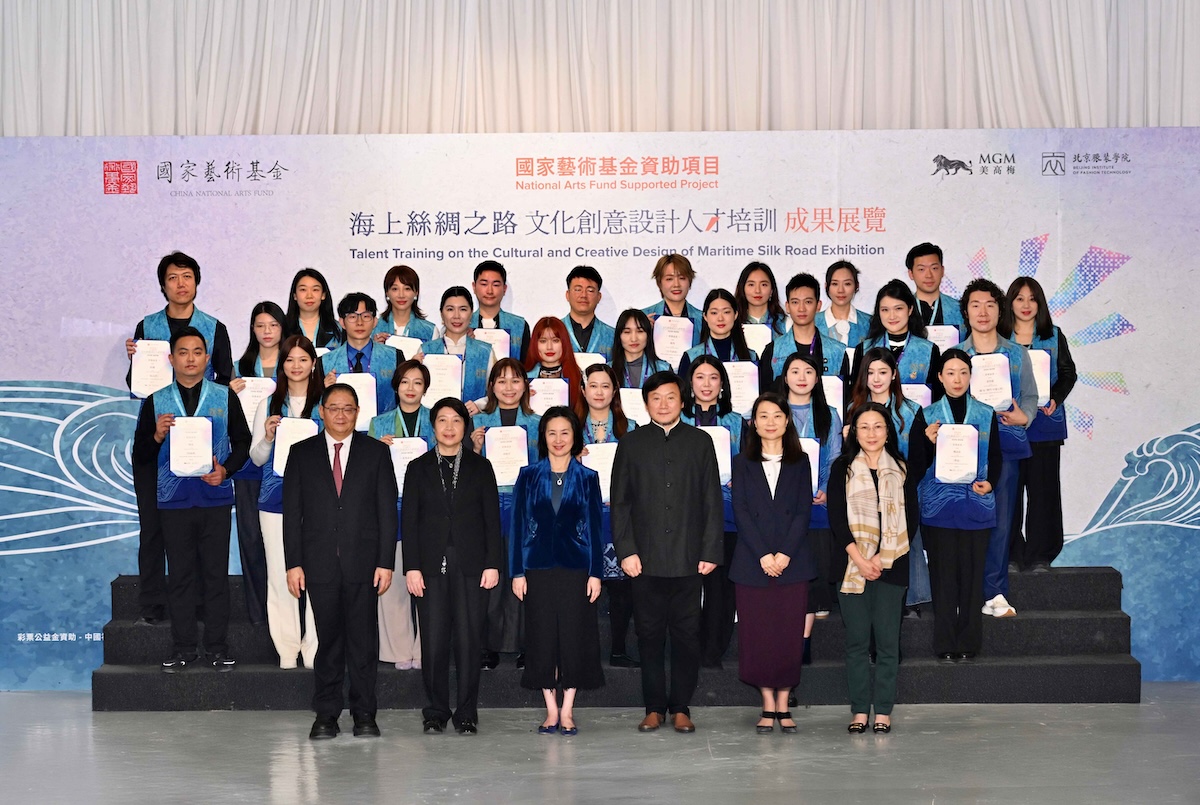
Organized by MGM, the 2025 National Arts Fund-supported project, “Talent Training on the Cultural and Creative Design of Maritime Silk Road”, officially opened its achievement exhibition on 5 February at Macau’s Barra District – the former site of the Barra Slaughterhouse.
Spanning nearly a year, the project was anchored at the POLY MGM MUSEUM as its study and training base. It brought together a faculty team formed in collaboration with the Palace Museum and Beijing Institute of Fashion Technology (BIFT) and conducted visits to multiple key node cities along the Maritime Silk Road. Through a training model integrating “cultural theory + professional field studies + design practice”, the program has advanced the cultivation of cultural and creative design talent and supported the transformation of outcomes into applicable results.
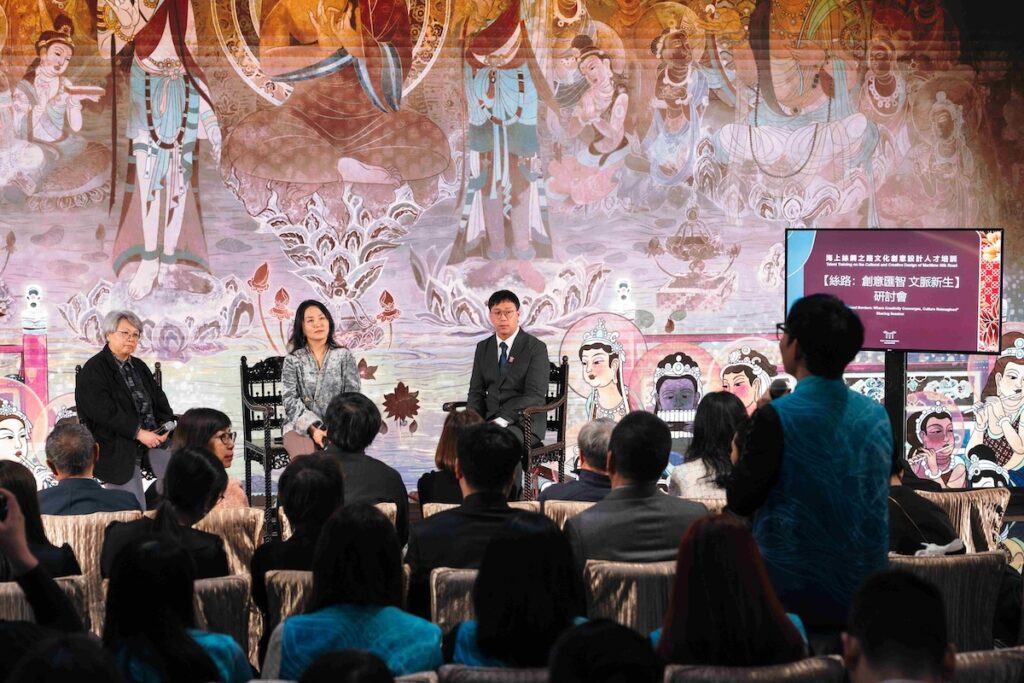
The achievement exhibition is regarded as another concrete demonstration of Macau’s practice of “Chinese culture as the mainstream while embracing cultural diversity”.
MGM said the event not only presents the participants’ creative achievements in a concentrated manner but also echoes Macau’s position in aligning with the national cultural development strategy and promoting exchanges and mutual learning among civilizations. Through the combined momentum of exhibition presentation, academic dialogue and industry linkage, the program further extends the practical value of talent training in the cultural and creative sector.
Leveraging Macau as a bridge
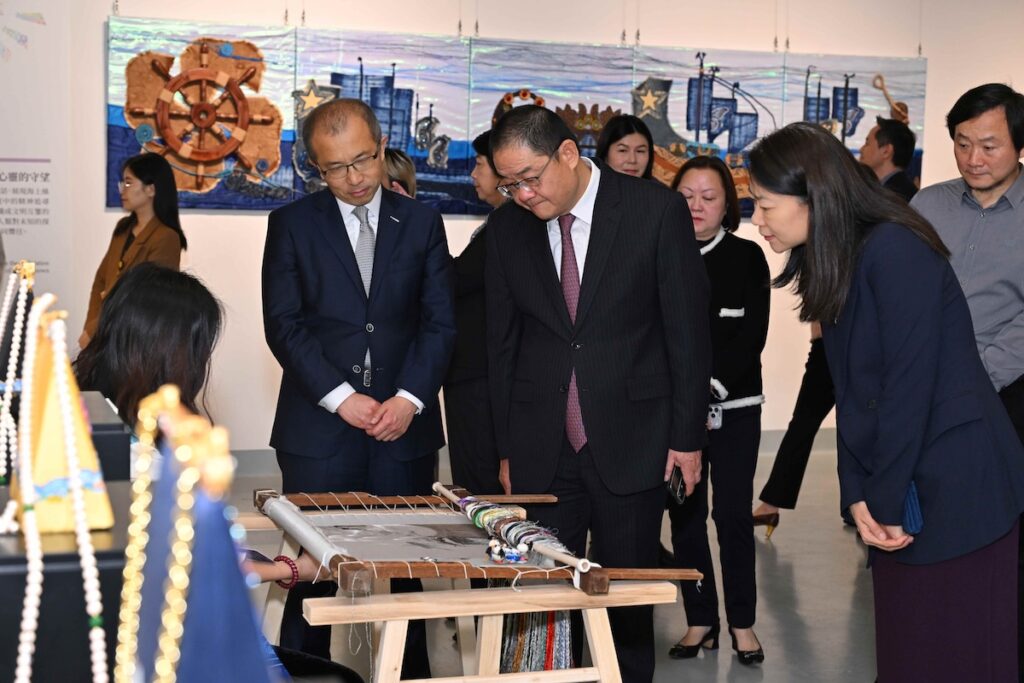
Distinguished guests at the opening ceremony included Bai Bing, Deputy Director General of the Department of Publicity, Cultural and Sports Affairs of the Liaison Office of the Central People’s Government in the Macao SAR; Leong Wai Man, Director of the Cultural Affairs Bureau of the Macao SAR and President of the Administrative Committee of the Cultural Development Fund; Jia Ronglin, President of BIFT; Fong Fong Tan, Director of the Livelihood Affairs Bureau of the Guangdong-Macao In-Depth Cooperation Zone in Hengqin; Wu Zhiliang, President of the Federation of Associations of Cultural Sectors of Macau; and Pansy Ho, Chairperson and Executive Director of MGM China Holdings Limited, together with project mentors and representatives from Macau’s museums, academic institutions and cultural and creative industries.
“Anchored on the platform of Macau, participants have embraced the spirit of the Maritime Silk Road, translating history and culture into works of contemporary aesthetic value and cultural confidence,” said Ho in her opening remarks.
She added that this ability to closely connect “traditional heritage” with “modern expression” is precisely the core competitiveness urgently needed for the cultural and creative industries to move from “manufacturing” to “creation”.
“Macau is a vivid exemplar of the encounter, dialogue and coexistence of Eastern and Western civilizations.” – Jia Ronglin
She further emphasized that, as a driving force behind the program, MGM will continue to leverage Macau as a bridge so that Chinese culture is not only an Eastern “view to be exported” but also a lifestyle and aesthetic choice that can truly “enter in” – allowing Chinese civilization to radiate in the contemporary era.
Ronglin stated, “Macau is a vivid exemplar of the encounter, dialogue and coexistence of Eastern and Western civilizations. With Macau as a cultural crossroads, this project deepens mutual learning among civilizations along the Maritime Silk Road, advances design innovation and talent cultivation, and revitalizes wisdom and aesthetics that transcend time and space. We hope participants, like envoys along the ancient Silk Road, will carry civilization, connect China with the world, empower culture through design and link hearts through creativity – contributing wisdom and strength on a broader stage to enhance the communication and influence of Chinese civilization.”
Using “the sea” as a thread
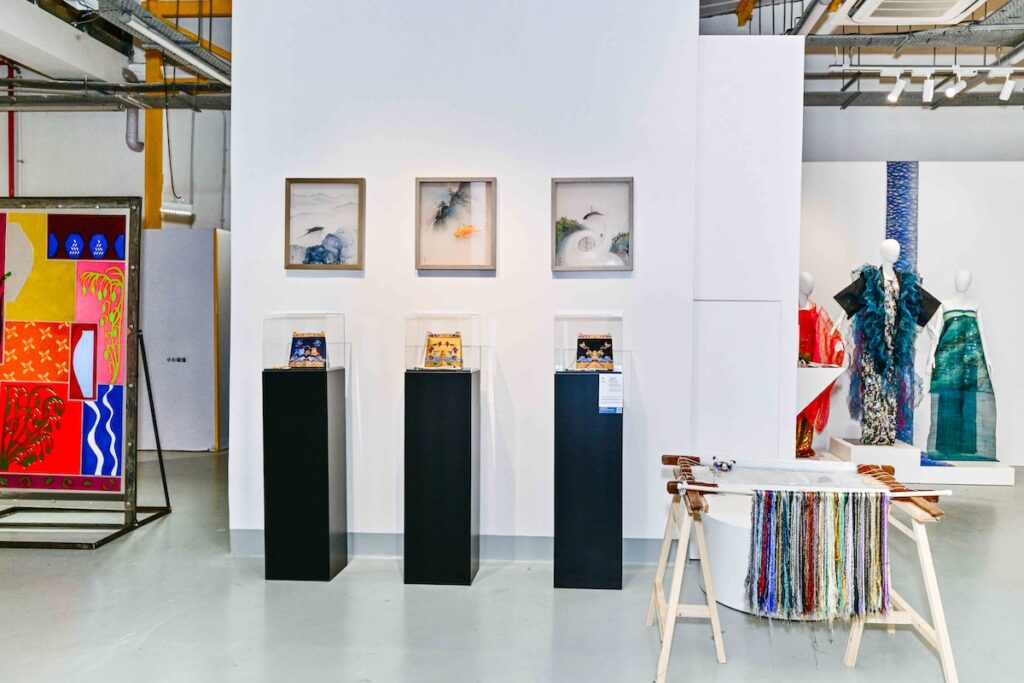
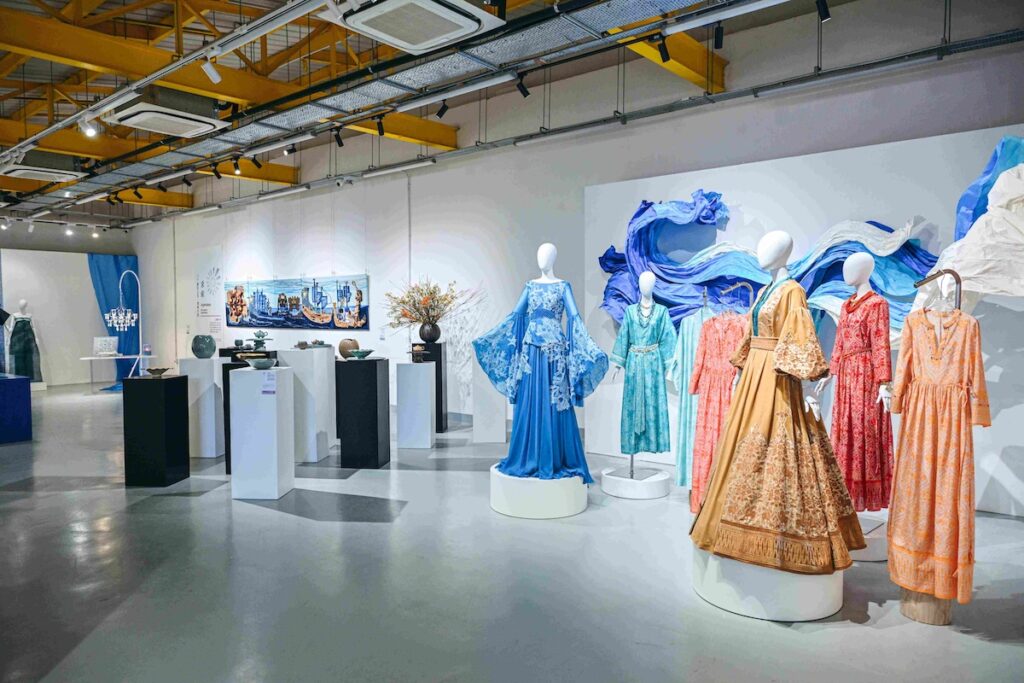
Following 60 days of intensive training and several months of further refinement, 30 participants completed a series of original works, which are showcased collectively in this exhibition. With “the sea” as its narrative thread, the exhibition is structured into six chapters – “Setting Sail”, “Seeking”, “Convergence”, “Flourishing”, “Passing the Torch” and “Tides and Echoes”. Through cultural interpretation, design translation and contemporary artistic expression, the exhibition presents participants’ multi-perspective explorations of the theme of the “Maritime Silk Road”.
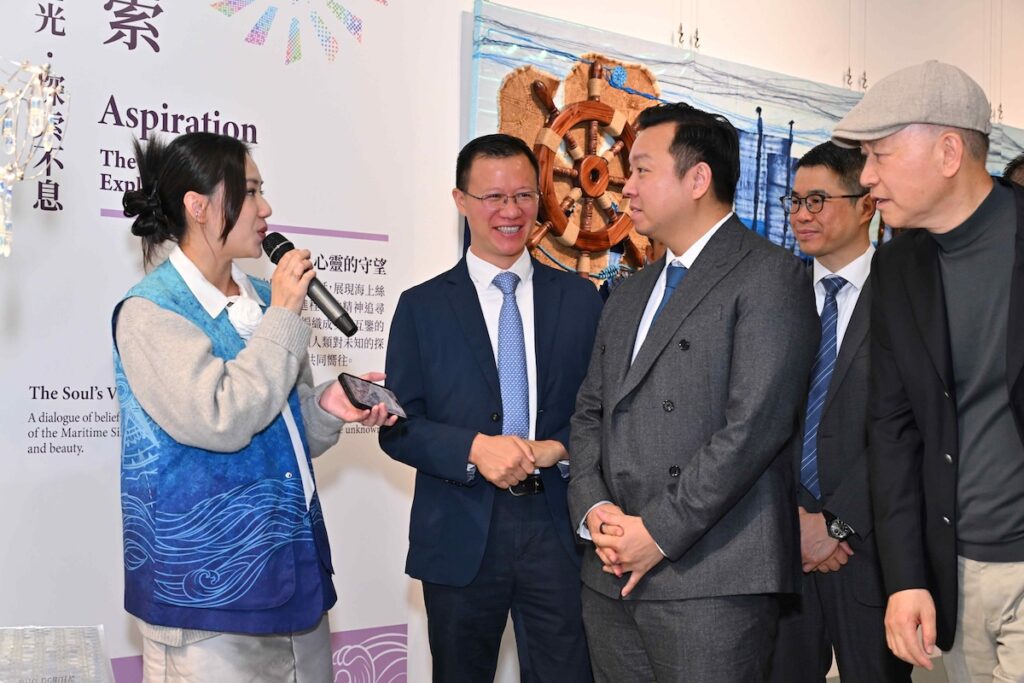
The exhibits on display span cultural and creative products, fashion design, painting, sculpture and multimedia installations. The works map a pathway of transformation from traditional symbols to contemporary creative language while injecting contemporary artistic vitality into the historically resonant Barra District.
Participant Sanchia Lau described the training as a cultural root-seeking journey that went beyond a conventional classroom.
To promote the connection between creative outcomes and industry needs, the organizer arranged a cross-sector exchange activity on the opening day. Professionals from cultural and creative industries, design, cultural tourism, branding and related fields were invited to meet participants face-to-face to discuss directions for product commercialization, branding and cross-disciplinary collaboration. The arrangement aims to strengthen the linkage across the “creativity-design-industry” chain, creating opportunities for training outcomes to enter the market and serve broader social application.
Academic symposium converges in Macau
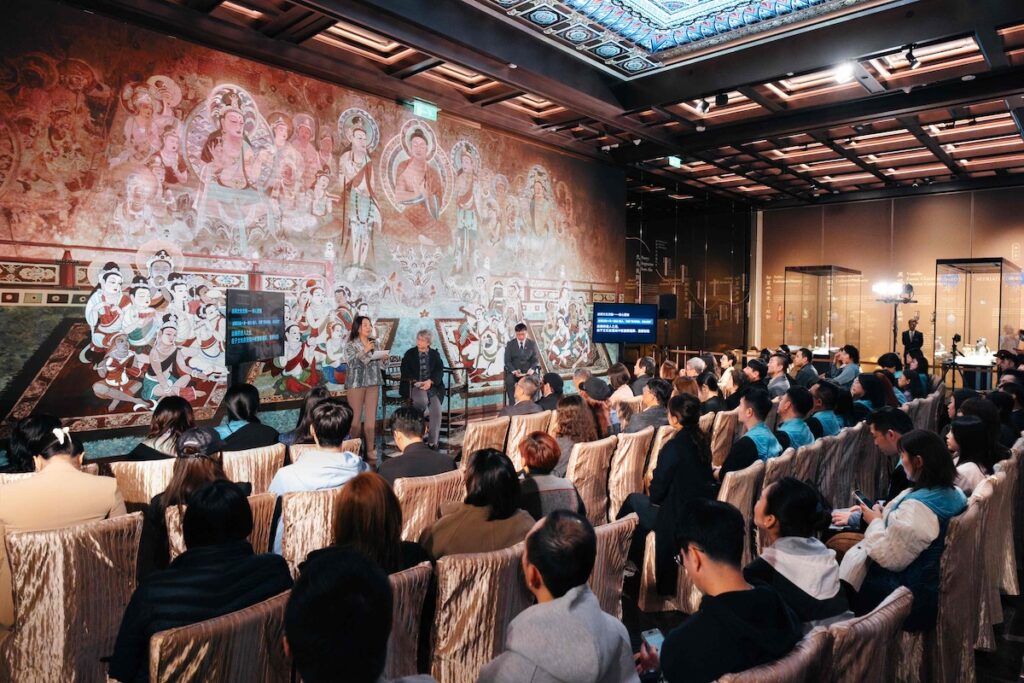
In addition to the achievement exhibition, the project’s extended activity – an academic symposium – was held that afternoon at the POLY MGM MUSEUM. The organizer stated that, in recent years, the museum has taken Silk Road cultural exchange as a key focus, hoping to facilitate dialogue between ancient history and culture and contemporary artistic creativity within the same space, while enabling diverse perspectives from East and West, past and present, to converge in Macau.
The symposium invited a number of influential scholars for dialogue across design history, archaeology and design fields. Experts engaged in exchanges with participants, as well as local teachers and students, on topics including contemporary interpretations of Silk Road culture, design methodologies and pathways for cultural and creative transformation. These discussions further broadened the project’s interdisciplinary perspective and strengthened the POLY MGM MUSEUM’s positioning as both a study base and a platform for Silk Road research and exhibition.
Macau participant Sanchia Lau described the training as a cultural root-seeking journey that went beyond a conventional classroom – from the Forbidden City in Beijing to the A-Ma Temple in Macau – reframing an understanding of the flow and transmission of Maritime Silk Road civilization.
“With a ‘reset-to-zero’ mindset, from the morning light at the Forbidden City to a renewed encounter at Macau’s A-Ma Temple, we re-understood how Maritime Silk Road civilization was communicated,” Lau said. “Macau carries a distinctive foundation where ‘Chinese and Western traditions stand side by side, and the ancient and the modern coexist’. In the future, I will take Macau as a pivot, shoulder the mission of ‘culture going to sea’ and translate traditional cultural symbols into a language shared globally, so the world can see Oriental aesthetics.”
The achievement exhibition is open to the public free of charge from 5 February to 8 March. Interactive extension activities are also available on site, encouraging the public to engage with art and design in a more relaxed manner. Through the linkage of exhibition presentation, academic symposium and industry exchange, MGM said it hopes to bring richer creative energy and expanded possibilities for collaboration to Macau’s cultural and artistic ecosystem.